
Table of Contents
Basics
Eagle
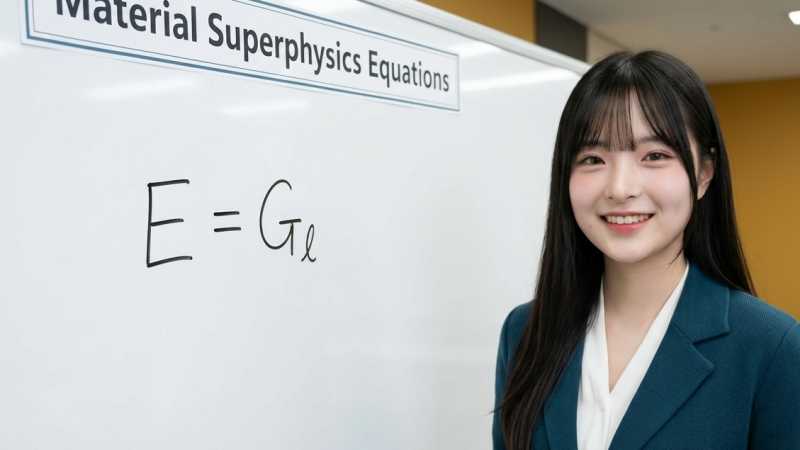
- E : Effort (metaphysical) or Energy (physical)
- G : Gravitational Signature or Svadharma
- l : Layer or Element
This also replaces the mass-energy equivalence of the scammer Einstein.
Active Eagle
- F : Force
- D : Displacer as Rule 1 and 3
- R : Rotater as Rule 2 and 3
Spatial
Gravity (Alternative to Newton’s Universal Law of Gravitation and General Relativity)
Relativity is replaced with the Eagle which uses Descartes’ 4 rules of motions
This:
- adds spacetime slices to mass via the aetherspace
- adds vortex rotation to inertia which has the imaginary number and Planck’s constant
The bending is done by the density difference between spacetime or aether particles, not by the warping of spacetime by mass.
Time Dilation (Alternative to Special Relativity)
Time dilation is based on the frequency or density difference of the body or aetherspace with the aether, and not be speed. Rather the speed is the effect of the density differences.
- : timespace vibrational frequency instead of velocity
When integrated with gravity:
Material
Liquid and Gas Dynamics (Alternative to Navier Stokes)
F = G·∇ρ/r² + 3G·∇ρ·L²/(c²r⁴)
Where:
- G·∇ρ/r² is the displacer — gravity (2nd element) pushing on density differences (4th element) across space
- 3G·∇ρ·L²/(c²r⁴) is the rotater — the spin correction where L is now local vorticity (angular momentum of fluid parcels) rather than orbital angular momentum
- The ratio L²/(c²r²) scales the spin by how relativistic the local rotation is — fast vortices get a stronger correction, which is exactly the turbulence cascade behaviour Navier-Stokes struggles to close
This focuses on the aether as a pressure gradient focusing on density instead of mass. This density gradient automatically exposes:
- Viscosity — because ∇ρ varies smoothly across the fluid, creating shear between layers of different density
- Continuity — because ρ must be conserved: ∂ρ/∂t + ∇·(ρu) = 0
- Self-advection — because a density gradient in a flowing field carries itself: the u·∇u term emerges naturally when matter particles drag each other through the aether
Leave a Comment
Thank you for your comment!
It will appear after review.