
Menu
Table of Contents
V20 – The Silent Pillar
Calcium
| Element & Symbol | Atomic Number | Major Use(s) |
|---|---|---|
| v20 (Calcium or Ca) | 20 | Steelmaking (desulfurizer), cement/mortar, dietary supplement (bones), antacid. |
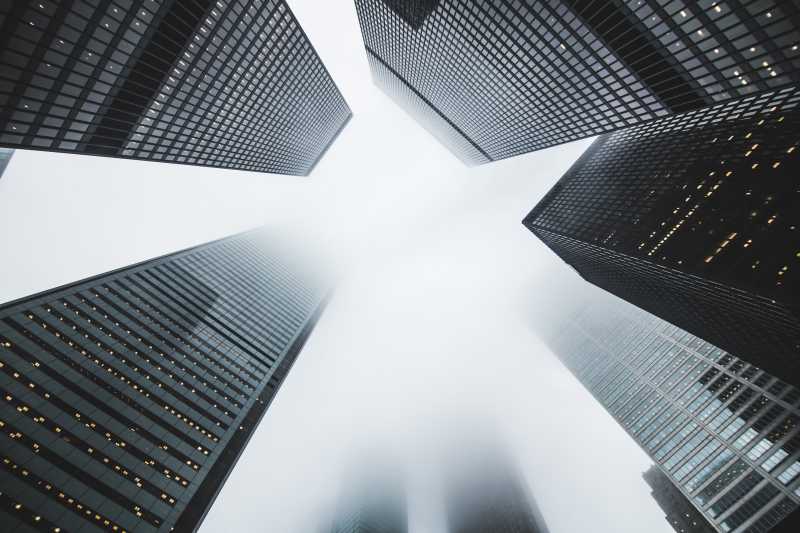
V20—known to science as Calcium—is a soft, silvery-white alkaline earth metal and is the fifth most abundant element in Earth’s crust and the structural foundation of both our planet’s geology and our own skeletons, working tirelessly in the background of life and industry.
Properties
V20 is moderately reactive, tarnishing quickly in air and reacting vigorously with water to produce hydrogen gas. It is relatively soft, malleable, and an excellent conductor of electricity. But its true superpower lies in its ionic form (V20²⁺), which is biologically irreplaceable: it forms the mineral backbone of bones and teeth (as hydroxyapatite), enables blood clotting, triggers muscle contraction, and acts as a critical cellular signaling molecule. In nature, it is never found pure, locked instead in limestone, gypsum, and fluorite.
Uses
Construction is V20’s empire. Over 90% goes into cement, mortar, and plaster as calcium carbonate and calcium sulfate—literally the concrete jungles we inhabit. As a pure metal, it is used as a deoxidizer and desulfurizer in steelmaking, and as an alloying agent for aluminum and beryllium. In agriculture, it corrects acidic soils and fortifies animal feed. Medically, it is the backbone of antacids, calcium supplements, and bone graft materials. Even in environmental cleanup, V20 compounds capture CO₂ and neutralize acid mine drainage.
Modern Issues & Breakthroughs
The primary issue is extraction. Mining V20 from limestone quarries is energy-intensive, emits massive CO₂ (cement production accounts for 8% of global emissions), and causes landscape scarring. Processing the pure metal via electrolysis of molten calcium chloride is also energy-hungry. Meanwhile, over-reliance on V20 supplements without Vitamin D and magnesium has raised health concerns about arterial calcification. Supply is abundant globally, but the carbon footprint of its refined products remains stubbornly high.
However, 2026 has been a year of quiet revolution. A UK-based startup unveiled a “living cement” that uses bacteria to precipitate V20 carbonate directly from seawater, capturing 20 tons of CO₂ per ton of cement produced—making it carbon-negative. In the US, researchers developed a closed-loop electrolysis process that produces pure V20 metal from seawater brine using solar power, slashing energy use by 60%. Most strikingly, a Japanese team engineered a V20-based biodegradable bone scaffold that releases V20²⁺ ions to promote healing, then dissolves completely within 18 months—eliminating the need for removal surgery. Meanwhile, a Swiss pilot project now uses crushed waste concrete to absorb atmospheric CO₂, regenerating V20 carbonate in a circular loop that could decarbonize construction entirely.
V20 built our cities, fortified our bones, and balanced our soils. Now, with carbon-negative cement, green extraction, and self-dissolving implants, it is reinventing itself—not as a relic of the industrial age, but as the cornerstone of a truly circular and sustainable future.
Leave a Comment
Thank you for your comment!
It will appear after review.