
Menu
Table of Contents
Profits are the revenue arising from the external lack experienced by other people, whether as lack of knowledge or cognition, or lack of goods or commodities. We definecommodities asanything that can be traded, whether physical or non-physical such as information. In fact, information can be commoditized in our system.
A shortage of anything that is in demand will naturally cause high prices and high profits for its seller. For example, food suppliers have high profits during famines.
This nature of profits is why the interests of those-who-live-by-profits (capitalists and merchants) are often opposite that of society – because society does not want external lack, but merchants and capitalists do, since they gain from that lack.
If the world were filled with iPhone manufacturers, there would be no lack of iPhones and their prices would drop. Thus, it is the shallow interest of the iPhone inventor to prevent the spread of knowledge of how to make it, through a monopolistic system called intellectual property.
If a con-man sold you an ordinary rock for $1,000 saying it came from Mars, and you actually bought it, then he would have gained revenue from your lack of knowledge. Likewise, a person can sell you valuable information for a high price, which would then be deemed as his profits, and not as wages nor rent, since it was a one-off deal. If his supply of information were regular, along with his customers, then his revenue gets the same nature as wages, with his customers acting as his employers.
Profits can be confounded with wages in other ways. For example, a salesman might earn a fixed wage plus a 5% commission for anything he sells. In his case, his commission is a profit. But since he lives off of his wages more, then we can say that he lives by wages.
Workers generally overwork themselves when liberally paid by the piece and ruin their health in a few years.. The same thing happens in other trades where the workers are paid by the piece wherever wages are higher than ordinary.
To Smith, ordinary profits, or the lowest possible nominal profits, are the best for society. With this definition, ordinary profits would mean that there is little lack in society. This state could only happen if there were many suppliers competing in an effort to reduce that lack.
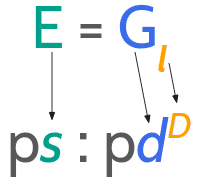
Since human desires are dynamic (you never want to eat just one food for a year, or just buy one shirt annually), lack is always created in the mind, which Smith calls absolute demand, a concept not present in modern Economics. This demand or desire, and not money, is the true engine for rent, wages, and profit as seen in our main formula:
Interest: The Profit in Lending
Interest is a revenue classified under profits and is the revenue from letting others use your money. If you use your money yourself, then the revenue is called profit. In Eastern metaphysics, we can say that profits are usually the revenue of the merchant or oligarch class or vaishyas.
The prophet Mohammad was a merchant and he knew the tendency of the oligarch class to destroy society by profiteering (feeding off of them by profits), so he simply banned profiteering.
Allah has permitted trading and forbidden Riba (usury)
This is similar how Socrates warned against excessive wealth in The Republic.
But there are two causes of the deterioration of the arts: Wealth and Poverty. When a potter becomes rich he will not think of you as much as before and grow more and more indolent and careless.. Here, then, is a discovery of new evils of wealth and poverty, against which the guardians will have to watch, or they will creep into the city unobserved.
By banning interest, Islamic banking converts profits into rent, taking power away from the merchant class and putting it into the landlord class, naturally leading to dictatorships in Islamic countries. The Western mind then sees this oppressive dictatorship and removes it in order to free the people, not knowing that it is the very glue that keeps their economy and society whole.
In contrast, Westerners are oppressed by their businessmen who turn them into mindless consumers. Getting rid of their businessmen would also cause Western society to unglue itself, and so they strongly protect business interests.
However, banning interest is as unnatural and oppresive as banning one class of humans from earning a revenue. To solve this, we use a points-based system wherein value is pegged to grains which do not suffer from interest rates. Instead, they suffer from inflation like any other commodity.
This is because they do not have an opportunity cost. Instead they have a storage cost.
Leave a Comment
Thank you for your comment!
It will appear after review.